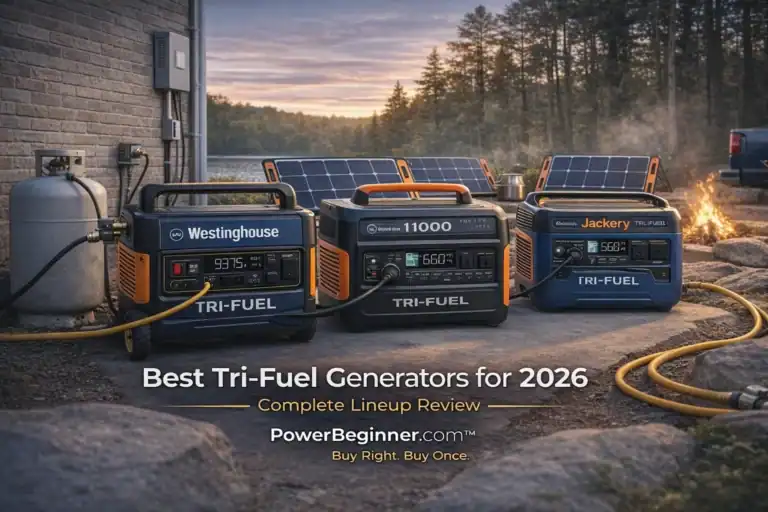
Natural gas connectivity means unlimited runtime during extended outages. Heres what to buy.
Most backup power planning focuses on fuel storage. How many gas cans do you need? How do you rotate stock so it doesnt go stale? Where do you store propane tanks safely? These are real problems that every generator owner faces.
Tri-fuel generators offer a third option that changes the equation entirely. Connect to your homes natural gas line, and you have unlimited fuel supply during any outage—no storage, no rotation, no running out during a week-long emergency.
This capability comes at a price premium over dual fuel models. But for homeowners with natural gas service who want true emergency preparedness, tri-fuel generators provide peace of mind that no amount of stored fuel can match.
Why Natural Gas Changes Everything
Natural gas delivery continues during most emergencies. While gas stations run dry and propane dealers get overwhelmed, the gas line to your house keeps flowing. The infrastructure that delivers natural gas is buried underground and rarely affected by the storms and events that cause power outages.
Unlimited runtime means genuine backup power. A gasoline generator runs until you run out of gas. A tri-fuel generator connected to natural gas runs until the power comes back on—whether thats hours, days, or weeks.
Zero fuel logistics during crisis situations. When everyone else is fighting for gasoline or hunting for propane, you’re home with your generator running quietly on municipal gas. No trips to gas stations. No tank swaps. No storage concerns.
Cleaner operation than liquid fuels. Natural gas burns cleaner than gasoline or propane, reducing carbon buildup and potentially extending engine life. Maintenance requirements decrease with cleaner fuel.
The tradeoff is installation complexity. Connecting a generator to natural gas requires a qualified technician and permits in most areas. This adds upfront cost but eliminates ongoing fuel concerns permanently.
Best Tri-Fuel Generators
Best Overall: Westinghouse 12500 Tri-Fuel
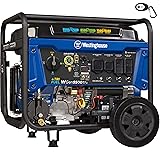
- 12500 Peak Watts, 9500 Running Watts (Gasoline); 11200 Peak Watts, 8500 Running Watts (Propane); 9500 Peak Watts, 7500 Running Watts (Natural Gas); Remote Start with Included Key Fob, Electric and Recoil Start; Up to 12 Hours of Run Time on a 6. 6 Gallon Fuel Tank with Fuel Gauge
- Features Two GFCI 120V 5–20R Standard Household Receptacle, One Transfer Switch Ready 120V L14-30R, and One RV Ready 120/240V 14–50R; All Outlets Have Rubber Covers for Added Safety
- Powered by a Heavy Duty 457cc Westinghouse 4-Stroke OHV Engine Featuring a Long-Lasting Cast Iron Sleeve with Automatic Low Oil and Carbon Monoxide (CO) Shutdown, and Digital Hour Meter
- Plug-and-Play: Comes with a Remote Start Key Fob, 12V Battery Charger, Oil, and Oil Funnel, a Tool Kit, and a User’s Manual to Get You Started Right Out of the Box (Minimal Assembly Required)
- All Westinghouse Portable Generators are Functionally Tested in the Factory and May Contain Minimum Residual Oil and/or Fuel Odor; EPA Compliant; Backed By 3-Year Limited Service, Labor, and Parts Coverage and Nationwide Customer Service Network

The Westinghouse 12500 Tri-Fuel delivers whole-house capability with maximum fuel flexibility. At 12,500 peak watts on gasoline, 11,200 on propane, and 10,800 on natural gas, this generator handles most residential loads regardless of fuel choice.
Remote electric start fires up the generator from inside your home. Transfer switch ready for professional panel integration. Digital display monitors all critical parameters. CO sensor provides automatic safety shutoff.
The slight power reduction on alternative fuels is normal physics—different fuels contain different energy densities. Even at 10,800 watts on natural gas, this generator runs most households comfortably.
Over 3,000 reviews at 4.8 stars from owners who’ve used all three fuel options during real emergencies.
Best Inverter: Westinghouse 8200 Tri-Fuel Inverter

- INVERTER BENEFITS, HOME BACKUP POWER: The Westinghouse iGen8200TFc is a tri fuel generator with all the benefits of an inverter, but also with home backup power and a 50A outlet; Gasoline: 6600 running/8200 peak watts, Propane: 5940 running/7380 peak watts, Natural Gas: 5280 running/6560 peak watts
- SAVE FUEL, SAVE MONEY, LESS NOISE: Inverter technology adjusts engine speed to meet power demand, significantly cutting fuel use compared to traditional generators. That's less refills and fuel runs–saving time, money, and hassle. It's also much quieter than open frames, around 60 dBA at 25% load
- TRANSFER SWITCH OR INTERLOCK KIT READY: One 120/240V 14–50R 50A outlet for home backup can run your air conditioner, refrigerator, sump pump, and more–all at once; One RV ready 120V TT-30R 30A outlet; One GFCI 120V 5–20R 20A standard duplex outlet
- LOW THD AND COPPER WINDINGS: With less than 3% THD, it's safe to power electronics like phones, computers and TVs to stay connected during outages, or on jobsites and campsites. Copper windings help the unit make cleaner power, run cooler and last longer
- DURABLE ENGINE WITH SAFETY BUILT-IN: Powered by a heavy duty 298 cc Westinghouse 4-stroke OHV engine with a cast iron sleeve; up to 17 hours of run time on a 3.9 gallon fuel tank at 25% load with automatic low oil shutdown and carbon monoxide (CO) sensor
When you need clean power with tri-fuel flexibility, the Westinghouse 8200 delivers. The 8,200 peak watts and 6,500 running watts provides serious capacity while the inverter technology produces power safe for sensitive electronics.
This is one of the few high-capacity inverter generators available with tri-fuel capability. For homes with extensive electronics, home offices, or medical equipment, the combination of clean power and unlimited natural gas runtime provides unique value.
Remote electric start, transfer switch ready, CO sensor—all the expected Westinghouse features in a tri-fuel inverter package that few competitors match.
Over 1,200 reviews at 4.7 stars from demanding users who needed this specific capability combination.
Best High-Capacity Inverter: Westinghouse 11000 Tri-Fuel
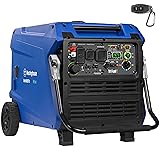
- THE BEST OF BOTH WORLDS: The Westinghouse iGen11000TFc is a tri fuel generator with all the benefits of an inverter, but also with whole home backup power and a 50A outlet; 9000 running /11000 peak watts (gasoline); 8100 running/10000 peak watts (propane); 7200 running/8800 peak watts (natural gas)
- SAVE FUEL, SAVE MONEY, LESS NOISE: Inverter technology adjusts engine speed to meet power demand, significantly cutting fuel use compared to traditional generators. That's less refills and fuel runs–saving time, money, and hassle. It's also much quieter than open frames
- TRANSFER SWITCH OR INTERLOCK KIT READY: Features one 120/240V 14–50R 50A outlet for home or RV and one 120V/240 L14-30R 30A twist lock, both outlets are transfer switch or interlock kit ready for home backup; includes one GFCI 120V 5–20R 20A duplex household outlet; all have rubber covers
- LED DATA CENTER: Digital display shows fuel level, power output, remaining run time, voltage output, and lifetime hours, taking the guesswork out of operation; also comes with a remote start key fob, LI battery, 12V battery charger, oil with funnel, and tool kit to get you going out of the box
- DURABLE ENGINE WITH SAFETY BUILT-IN: Powered by a heavy duty 457 cc Westinghouse 4-stroke OHV engine with a long-lasting cast iron sleeve; up to 19 hours of run time on a 7.9 gallon fuel tank with automatic low oil shutdown and carbon monoxide (CO) sensor; less engine noise with as low as 64 dBA
The largest inverter generator in Westinghouse’s tri-fuel lineup delivers 11,000 peak watts and 8,500 running watts. This handles serious whole-house loads while producing inverter-clean power suitable for any electronics.
For homes with significant power requirements and sensitivity to power quality, this generator represents the top of the residential tri-fuel market. The natural gas connection provides unlimited runtime during extended events.
At around $1,949, this is a significant investment. But for buyers who need maximum capacity with clean power and unlimited fuel potential, few alternatives exist.
Over 1,100 reviews at 4.7 stars from homeowners with demanding power requirements.
Choosing the Right Tri-Fuel Generator
For whole-house backup with maximum capacity: Westinghouse 12500 Tri-Fuel. The conventional (non-inverter) design delivers maximum watts per dollar. Suitable for central AC, well pumps, and multiple circuits simultaneously.
For clean power with tri-fuel flexibility: Westinghouse 8200 Tri-Fuel Inverter. The inverter technology protects sensitive electronics while still providing natural gas connectivity. Best for homes with extensive electronics or medical equipment.
For maximum inverter capacity: Westinghouse 11000 Tri-Fuel Inverter. When you need both clean power AND whole-house capability, this is the top of the market.
Natural Gas Installation Requirements
Connecting a tri-fuel generator to natural gas requires proper installation. Heres what to expect:
Licensed technician requirement. Most jurisdictions require a licensed gas technician or plumber to install natural gas connections. This isnt optional—improper gas connections create explosion and fire hazards.
Permit and inspection. Many areas require permits for gas line work. The inspector verifies proper installation before approving the connection for use. Plan for this timeline when preparing your backup power system.
Dedicated gas line. Your generator needs adequate gas supply. For larger generators, this may require a dedicated line from your meter rather than tapping into an existing line that also serves other appliances.
Quick-connect fitting. Most installations use a quick-connect fitting that lets you connect and disconnect the generator easily. This allows using the generator with gasoline or propane for portable applications while having natural gas available for home backup.
Typical installation cost. Expect $200-600 for basic installations where existing gas infrastructure is nearby. Complex installations requiring new lines from the meter can cost $1,000+. Get quotes from multiple contractors.
Power Output on Different Fuels
Every tri-fuel generator produces different power output depending on fuel choice. This is normal and reflects the energy content of each fuel.
Gasoline provides maximum power. Generators are typically rated at their gasoline output. This is your peak capacity when maximum power matters.
Propane reduces output by approximately 10%. A 12,500-watt gasoline generator typically produces 11,200 watts on propane. Still substantial, but plan accordingly for high-demand situations.
Natural gas reduces output by approximately 15%. That same generator produces about 10,800 watts on natural gas. For sustained operation during extended outages, this reduction rarely matters—you’re trading peak capacity for unlimited runtime.
Plan for natural gas capacity. If you’re installing natural gas specifically for emergency backup, size your loads against the natural gas rating rather than the gasoline rating. This ensures you wont overload the generator during extended operation on gas.
Tri-Fuel vs Dual Fuel: When to Upgrade
Tri-fuel generators cost more than dual fuel equivalents. The premium is worth it in specific situations.
Choose tri-fuel if:
- Your home has natural gas service
- You want unlimited runtime during extended outages
- You prefer zero fuel storage and maintenance
- You’re installing permanent backup power infrastructure
- Extended outages (ice storms, hurricanes) are common in your area
Stick with dual fuel if:
- Your home lacks natural gas service
- You primarily need portable generator capability
- Budget constraints are significant
- You’re comfortable managing fuel storage
- You rarely experience multi-day outages
The natural gas connection only provides value if you’ll actually use it. For homes without gas service or owners who want portable capability, dual fuel models offer better value.
Inverter vs Conventional for Tri-Fuel
The tri-fuel market offers both inverter and conventional options. Understanding the difference helps you choose correctly.
Conventional tri-fuel generators (like the 12500):
- Higher maximum output for the price
- Adequate power quality for most appliances
- Louder operation
- Better value for pure capacity needs
Inverter tri-fuel generators (like the 8200 and 11000):
- Clean power safe for all electronics
- Quieter operation
- Higher price per watt
- Essential for sensitive equipment
Most homes can use conventional generators without issues. Inverter models matter when you have expensive electronics, medical equipment, or strong noise sensitivity.
Maintenance Considerations
Tri-fuel generators share maintenance requirements with their dual fuel counterparts, with a few additions.
Regular maintenance applies regardless of fuel. Oil changes, spark plug replacement, air filter cleaning—these requirements remain constant regardless of which fuel you use.
Natural gas connections require periodic inspection. Check fittings annually for leaks using soapy water. Any bubbling indicates a leak requiring immediate repair by a qualified technician.
Fuel system components for each fuel need attention. The gasoline carburetor, propane regulator, and natural gas fittings each have maintenance requirements. Using all three fuels periodically keeps each system operational.
Cleaner fuels reduce some maintenance. Running on natural gas or propane produces less carbon buildup than gasoline, potentially extending time between certain maintenance items. But don’t skip scheduled maintenance based on fuel choice alone.
Frequently Asked Questions
Does natural gas work during a power outage?
Usually yes. Natural gas delivery uses underground infrastructure that rarely fails during storms and events that cause electrical outages. However, major disasters affecting gas infrastructure could interrupt supply. Tri-fuel capability provides alternatives if gas fails.
How much does natural gas installation cost?
Basic installations typically cost $200-600 for the connection work. Complex installations requiring new gas lines can exceed $1,000. Get quotes from multiple licensed contractors before proceeding.
Can I use all three fuels interchangeably?
Yes, but not simultaneously. Tri-fuel generators have a fuel selector that chooses which fuel source to use. You must stop the generator and switch fuels—you cannot blend or switch fuels while running.
Is natural gas cheaper than gasoline for running a generator?
Usually yes, significantly. Natural gas typically costs less per hour of generator operation than gasoline, and often less than propane. Exact savings depend on local fuel prices, but natural gas is generally the most economical fuel option.
What happens if gas pressure drops during high demand?
Extremely cold weather can cause natural gas pressure drops in some areas during peak demand. This could affect generator performance. Propane and gasoline provide backup options if natural gas pressure becomes inadequate.
Do tri-fuel generators require special maintenance?
Maintenance is similar to dual fuel generators with the addition of periodic natural gas fitting inspection. The complexity is modest—you’re maintaining three fuel systems instead of two, but none are particularly demanding.
Can I install the natural gas connection myself?
No. Gas line work requires licensed technicians and permits in virtually all jurisdictions. Improper gas connections create serious explosion and fire hazards. Always use qualified professionals for gas work.
Last updated: February 2026. Prices and availability subject to change. We may earn a commission from purchases made through links on this page.
Last update on 2026-04-25 / Affiliate links / Images from Amazon Product Advertising API