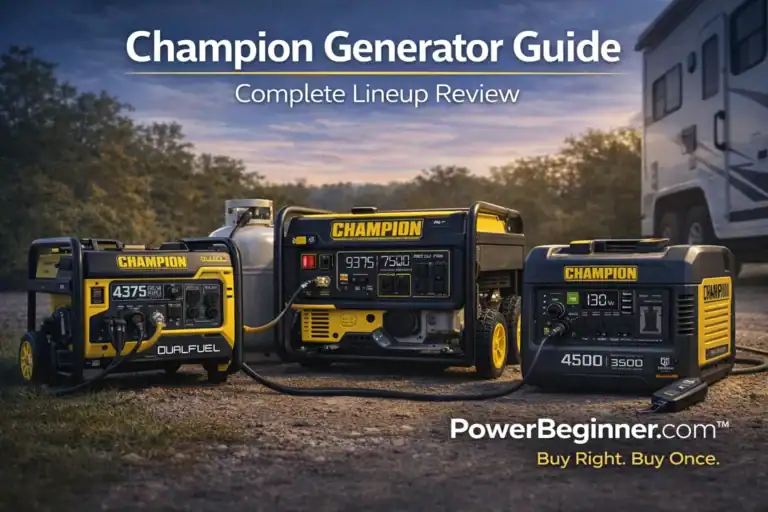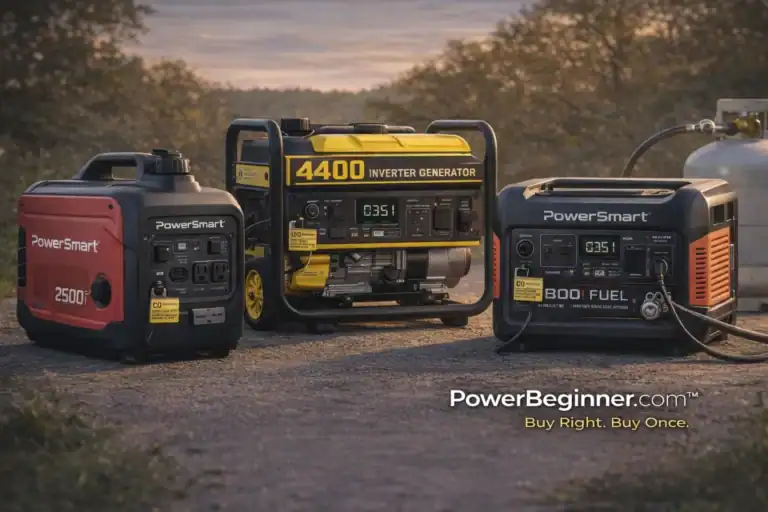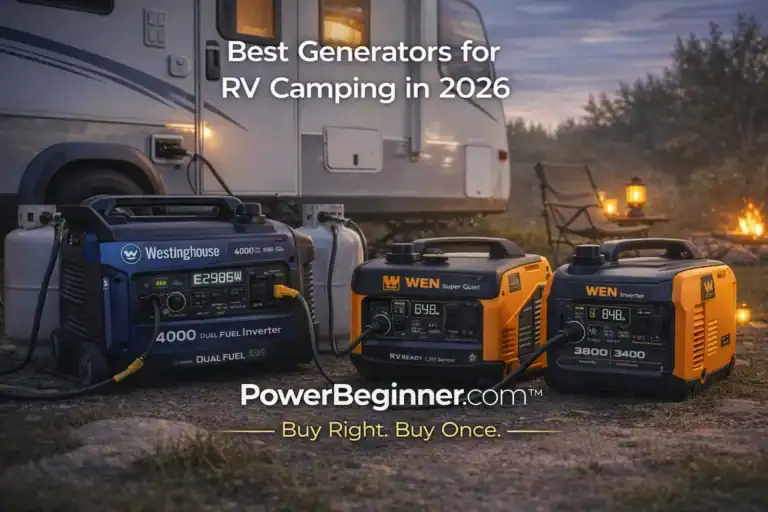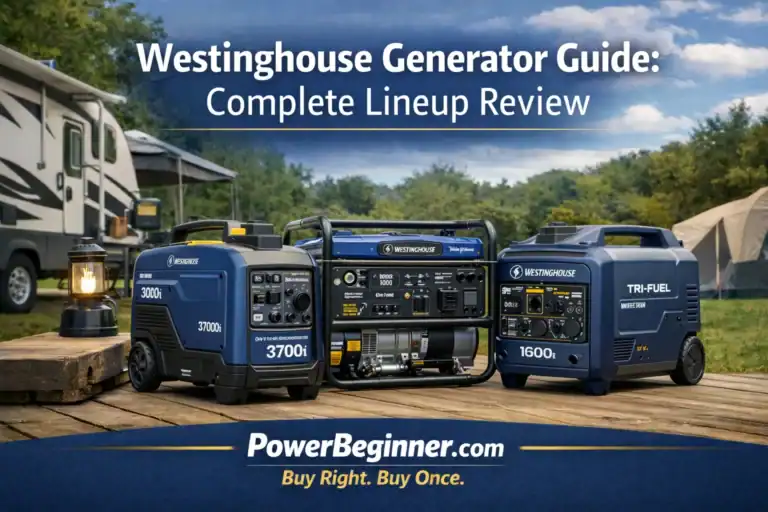
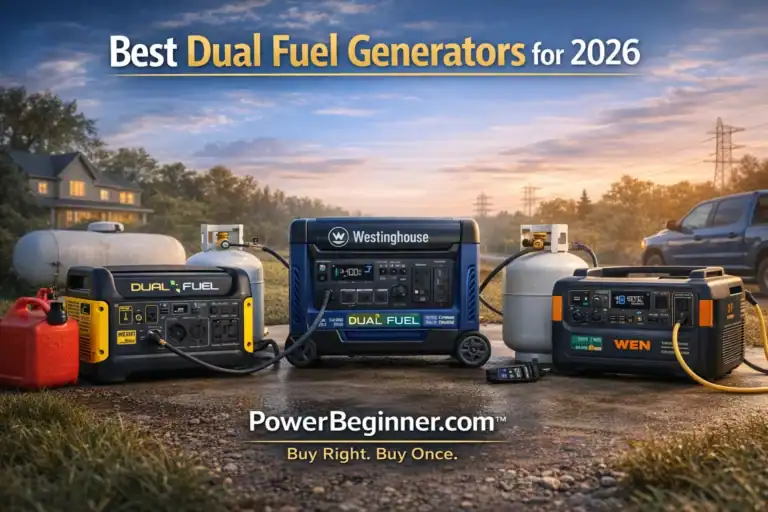
The first time you experience a real emergency—hurricane, ice storm, extended grid failure—you learn something important about single-fuel generators. Gas stations close. Or they run out. Or the lines stretch for hours because everyone else had the same idea at the same time.
Dual fuel generators solve this problem by running on either gasoline or propane. When one fuel source becomes scarce, you switch to the other. Simple concept, massive practical difference when it actually matters.
We’ve tested and researched the dual fuel generator market extensively. What follows are our top recommendations based on performance, reliability, build quality, and real owner experiences. These arent theoretical picks—theyre the generators people actually buy, use during emergencies, and recommend to their neighbors.
Why Dual Fuel Matters
Propane has several advantages over gasoline that become critical during emergencies.
Propane stores indefinitely. Gasoline degrades within months, requiring fuel stabilizer and regular rotation. Propane tanks can sit in your garage for years and work perfectly when needed.
Propane availability differs from gasoline. During major emergencies, gas stations get overwhelmed. Propane is distributed through different channels—hardware stores, propane dealers, exchange programs. When everyone’s fighting over gasoline, propane might still be available.
Propane burns cleaner. Less carbon buildup means less maintenance over time. Many generator owners switch to propane as their primary fuel specifically to reduce carburetor issues and extend engine life.
The tradeoff is simple: propane produces slightly less power than gasoline (typically 10-15% less), and BTU-for-BTU costs vary by region. But the flexibility and storage advantages outweigh these minor drawbacks for most users.
Best Dual Fuel Generators
Best Overall: WEN DF451i 4500-Watt
- Dual fuel design runs on both gasoline (4500 surge watts, 3500 rated watts) and propane (4500 surge watts, 3150 rated watts)
- Auto Fuel Selection Technology automatically switches from propane to gasoline for longer run times
- EPA III and CARB compliant 212cc engine provides extremely quiet operation (58 dBA at quarter load, 22 feet)
- Produces clean power to prevent damage to sensitive electronics such as smartphones, tablets and laptops
- Includes keyless electric start, back-up recoil starter, fuel shut-off for easier maintenance, onboard wheels and carrying handle, two three-prong 120V receptacles, one RV-ready AC 120V NEMA TT-30R receptacle, one 12V DC receptacle, one 5V USB port, a digital load and fuel display, and a three-year limited warranty

The WEN DF451i represents the sweet spot for dual fuel inverter generators. At 4,500 starting watts and 3,700 running watts on gasoline (4,000/3,200 on propane), it handles most household essentials during an outage.
What makes this generator special is the inverter technology combined with dual fuel capability. Clean power for sensitive electronics. Quiet operation that wont make your neighbors hate you. And the fuel flexibility that makes dual fuel generators valuable in the first place.
Electric start with the included battery means no pull-starting in the cold. The fuel shutoff feature lets the carburetor run dry before storage, eliminating most carburetor-related problems that plague stored generators. CO watchdog automatically shuts down the unit if carbon monoxide reaches dangerous levels.
Over 3,000 reviews at 4.59 stars. Thats not marketing—thats thousands of real owners reporting real experiences.
Best Value Under $500: Champion 4375 Dual Fuel

- Your purchase includes One Champion 3500-Watt Dual Fuel RV Ready Portable Generator and One LPG Hose with Regulator
- Portable Generator dimensions – 23.2” L x 19.1" W x 20" H | Product weight – 104.9 lbs. | Hose length – 3.3’
- Specifications: Noise level – 68 dBA. Fuel tank capacity (GASOLINE) – 3.4 gallons | Engine Size 224cc
- Operate your 3500-watt portable generator right out of the box on either gasoline or propane, plus the unit holds 0.6-quarts of oil and has a low oil shut-off sensor
- Keep track of voltage, hertz and run-time hours to easily monitor power output and track maintenance intervals with Intelligauge
If budget matters more than whisper-quiet operation, the Champion 4375 delivers serious value. At around $510, you get 4,375 starting watts and 3,500 running watts—enough for refrigerator, freezer, lights, and a few other essentials.
This is a conventional generator, not an inverter. Its louder and produces less refined power. But for running non-sensitive equipment during emergencies, it works perfectly well. The RV-ready 30A outlet handles standard RV hookups without adapters.
Champion’s Volt Guard built-in surge protector adds peace of mind when powering electronics. The Intelligauge display shows voltage, hertz, and runtime hours at a glance.
891 reviews averaging 4.59 stars. People buy this generator specifically because it works reliably at a price that doesn’t require a second mortgage.
Best Premium Inverter: Westinghouse 11000 Dual Fuel

- 9000 Running Watts and 11000 Peak Watts (Gasoline), 8100 Running Watts and 10000 Peak Watts (Propane) at Less Than 3% THD; Remote Electric Start with Included Key Fob, Push Button and Recoil Start; Up to 17 Hours of Run Time on a 9.8 Gallon Fuel Tank
- Features Two GFCI 120V 5–20R 20A Standard Household Outlets, One Transfer Switch Ready 120V L14-30R 30A Outlet, and One Transfer Switch Ready 120/240V 14–50R 50A Outlet; All Outlets Have Rubber Covers for Added Safety
- Led Data Center: Rotating Digital Display Shows Fuel Level, Power Output, Remaining Run Time, Voltage Output, and Lifetime Hours
- Powered by a Heavy Duty 457cc Westinghouse 4-Stroke OHV Engine Featuring a Long-Lasting Cast Iron Sleeve with Automatic Low Oil Shutdown and Carbon Monoxide (CO) Sensor
- Plug-and-Play: Comes with a Remote Start Key Fob, 12V Battery Charger, Oil, an Oil Funnel, a Tool Kit, and a User’s Manual to Get You Started Right Out of the Box (Minimal Assembly Required)
When you need serious power with inverter-quality output, the Westinghouse 11000 delivers. At 11,000 peak watts and 9,000 running watts on gas (10,000/8,000 on propane), this generator handles whole-house backup for most homes.
Remote electric start means you can fire it up from inside the house—useful when you dont want to trudge through a storm to start your generator. Transfer switch ready for professional installation. Parallel capable if you somehow need even more power.
The price premium over conventional generators is significant. But if you’re powering sensitive electronics, running variable-speed equipment, or simply value the dramatically quieter operation, inverter technology justifies the cost.
1,246 reviews at 4.7 stars. This is the dual fuel generator people buy when they’re done messing around with cheaper options.
Best for Extended Outages: Champion 4500 Electric Start
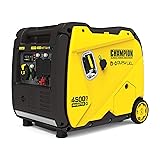
- DUAL FUEL: Operate your 4500-watt portable generator right out of the box on either gasoline or propane, plus the unit holds 0.6-quarts of oil (10W-30 oil included) and has a low oil shut-off sensor.Fuel Gauge : No. Voltmeter : No.
- ELECTRIC START: Battery included, plus Quick Touch Panel allows you to access all your controls in one spot
- QUIET OPERATION: 61 dBA is perfect for RVs, tailgating, your next project or backup power for your home, featuring 4500 starting watts and 3500 running watts with up to 14 hours run time on gasoline
- CLEAN POWER: RV Ready with a 120V 30A RV, plus two 120V 20A household outlets with clean electricity (less than 3% THD) and 12V DC outlet with dual USB adapter
- CHAMPION SUPPORT: Includes 3-year limited warranty with FREE lifetime technical support from dedicated experts
The Champion 4500 stands out for one critical reason: the combination of features that matter during multi-day outages. Electric start. Dual fuel. Quiet Technology (50% quieter than standard Champion generators). CO Shield safety shutoff.
At 4,500 starting watts and 3,500 running watts, the power output handles essential loads comfortably. But its the combination of electric start plus dual fuel that makes this generator practical for extended events. No pull-starting when you’re exhausted. Fuel flexibility when supplies get tight.
The wireless remote start works up to 80 feet away. Start your generator from the comfort of your home, then go outside once its running and warmed up.
Nearly 1,900 reviews at 4.7 stars puts this among the highest-rated dual fuel generators available.
Best Budget Dual Fuel: PowerSmart 3800-Watt

- Dual fuel: gasoline (3800 starting watts, 3300 running watts) and propane (3500 starting watts, 3100 running watts), 4.5 hours run time at 50% load
- Convenience: Equipped with a 30A outlet for RV, Home use, Emergency power outage, and Outdoor Adventures
- Quiet Operation: 59 dBA from 23 feet at 25% load, 70 dBA from 23 feet at full load
- Panel: Two three-prong 120V 20 Amp NEMA 5-20R receptacle,one 120V 30 Amp RV receptacle, one 12V DC Outlet, two 5V USB ports, parallel ports
- Features: Eco Mode, Low Oil Shutdown, Overload Reset, Carbon Monoxide Auto Shutdown
PowerSmart has carved out a niche in the budget generator market, and the 3800-watt dual fuel model shows why. At around $450, you get dual fuel capability, inverter technology, and CO protection—features that used to require spending twice as much.
The 3,800 starting watts and 3,000 running watts cover basic backup needs. Refrigerator, freezer, lights, phone charging. Maybe a small window AC unit. Not whole-house power, but enough to stay comfortable during most outages.
The 30A outlet handles RV hookups. Electric start eliminates pull-cord frustrations. At this price point, the feature set is genuinely impressive.
Newer to market with around 370 reviews, but averaging 4.59 stars from early adopters.
Best High-Capacity: Westinghouse 11000 Dual Fuel Inverter
- 9000 Running Watts and 11000 Peak Watts (Gasoline), 8100 Running Watts and 10000 Peak Watts (Propane) at Less Than 3% THD; Remote Electric Start with Included Key Fob, Push Button and Recoil Start; Up to 17 Hours of Run Time on a 9.8 Gallon Fuel Tank
- Features Two GFCI 120V 5–20R 20A Standard Household Outlets, One Transfer Switch Ready 120V L14-30R 30A Outlet, and One Transfer Switch Ready 120/240V 14–50R 50A Outlet; All Outlets Have Rubber Covers for Added Safety
- Led Data Center: Rotating Digital Display Shows Fuel Level, Power Output, Remaining Run Time, Voltage Output, and Lifetime Hours
- Powered by a Heavy Duty 457cc Westinghouse 4-Stroke OHV Engine Featuring a Long-Lasting Cast Iron Sleeve with Automatic Low Oil Shutdown and Carbon Monoxide (CO) Sensor
- Plug-and-Play: Comes with a Remote Start Key Fob, 12V Battery Charger, Oil, an Oil Funnel, a Tool Kit, and a User’s Manual to Get You Started Right Out of the Box (Minimal Assembly Required)
When 5,000 watts wont cut it and you need real whole-house capacity, the Westinghouse 11000 delivers 11,000 peak watts and 9,000 running watts on gasoline (10,000/8,000 on propane). Thats enough for most central AC systems, well pumps, and full household electrical loads.
This is an inverter generator, so it produces clean power safe for sensitive electronics while still delivering serious capacity. The dual fuel capability lets you run gasoline when convenient or switch to propane when gas becomes scarce or for extended outages.
Remote electric start means you can fire it up from inside the house. Transfer switch ready for professional installation. CO sensor provides automatic safety shutoff.
At around $1,899, this is a serious investment. But 1,246 reviews at 4.7 stars confirms it delivers when it matters most.
Best RV-Focused: WEN DF480iX 4800-Watt

- 224cc dual-fuel engine runs on both gasoline (4800 surge watts, 4000 rated watts) and propane (4320 surge watts, 4000 rated watts)
- Extremely quiet operation comparable to the sound of a normal conversation according to the US Department of Health and Human Services
- Produces clean power to prevent damage to sensitive electronics such as smartphones, tablets and laptops
- The WEN Watchdog CO Shutdown Sensor helps protect both you and your family by automatically turning off the generator if dangerous levels of carbon monoxide are detected
- Includes fuel shut-off to help limit maintenance, onboard wheels, a telescoping pull handle, four three-prong 120V receptacles, one TT-30R RV receptacle, one 12V DC receptacle, two 5V USB ports, a tool-free LPG quick-connector, and a three-year warranty
RV owners have specific needs. Quiet operation in campgrounds. 30A RV-ready outlets. Enough power for AC systems. The WEN DF480iX checks all these boxes while adding dual fuel flexibility.
At 4,800 starting watts and 3,800 running watts on gasoline, this generator comfortably runs most RV air conditioners. The inverter technology keeps it quiet enough for campground use without generating complaints.
The electric start and CO watchdog make it practical for regular use. The dual fuel capability means you can run propane in areas with fire restrictions or when gasoline availability is uncertain.
Relatively new to market but already earning strong reviews from the RV community.
Understanding Dual Fuel Power Ratings
Every dual fuel generator produces less power on propane than on gasoline. This is physics, not a defect. Propane contains fewer BTUs per gallon than gasoline, so the same engine produces less power.
Typical reduction is 10-15% on propane. A generator rated at 4,500 watts on gasoline might produce 3,800-4,000 watts on propane.
For most users, this barely matters. If you size your generator correctly for gasoline operation, the propane reduction still leaves plenty of capacity. The flexibility to switch fuels outweighs the modest power reduction.
Runtime Expectations
Fuel consumption varies with load. Manufacturers quote runtime at 25% or 50% load, which doesn’t reflect real-world usage where loads fluctuate constantly.
Realistic runtime estimates at 50% load:
| Generator Size | Gasoline Tank | Gas Runtime | Propane 20lb Tank |
|---|---|---|---|
| 3,500 watts | 3-4 gallons | 8-12 hours | 6-10 hours |
| 4,500 watts | 4-5 gallons | 8-10 hours | 6-8 hours |
| 7,500 watts | 6-8 gallons | 8-11 hours | 5-8 hours |
| 12,000 watts | 8-10 gallons | 6-10 hours | 4-6 hours |
Stock multiple propane tanks for extended outages. A single 20-pound tank doesn’t last as long as you’d hope when running real loads.
Propane Connection Types
Most dual fuel generators use a standard propane hose connection that works with standard 20-pound grill tanks. Some models include the hose; others require purchasing it separately.
For extended runtime, consider larger propane tanks. 40-pound and 100-pound tanks connect with the same hose and significantly extend runtime between changes. If your home has a large propane tank for heating, some users install a permanent connection to their generator location.
Check local codes before installing permanent propane connections. Some jurisdictions require licensed installation for fuel line work.
Maintenance Differences
Running on propane reduces certain maintenance requirements. Cleaner combustion means less carbon buildup in the combustion chamber. No carburetor gumming from degraded gasoline. Spark plugs last longer.
However, dual fuel systems add complexity. The fuel selector valve and propane regulator are additional components that can eventually fail. The tradeoff generally favors dual fuel—propanes cleaner operation outweighs the added complexity for most users.
Maintenance schedule remains similar:
- Monthly: Run under load for 15-30 minutes
- Annually: Oil change, spark plug inspection, air filter check
- Before storage: Run carburetor dry if using gasoline
Frequently Asked Questions
Can I switch between gasoline and propane while the generator is running? No. Never switch fuel sources while the engine is running. Shut down completely, wait for the engine to cool, then switch the fuel selector and restart. Switching while running can damage the fuel system and create safety hazards.
Is propane or gasoline cheaper to run? It depends on local prices, which vary significantly by region and season. Propane typically costs more per hour of runtime, but the difference is usually modest. Most dual fuel owners choose fuel based on availability and convenience rather than cost.
Do I need a special propane tank for my generator? No. Standard 20-pound propane tanks used for grills work with most dual fuel generators. Some generators include the hose and regulator; others require purchasing these separately. Check the included accessories before buying additional equipment.
How long do propane tanks last on a generator? A standard 20-pound propane tank runs a 3,500-4,500 watt generator for approximately 6-10 hours at 50% load. Larger generators consume propane faster. Stock multiple tanks for extended outages.
Can I convert a gasoline generator to dual fuel? Conversion kits exist for some generator models, but we don’t recommend them for most users. Factory dual fuel generators integrate the fuel systems properly and maintain warranty coverage. Aftermarket conversions void warranties and may not meet safety certifications.
Do dual fuel generators require more maintenance? Not significantly. The propane system adds a regulator and fuel selector valve, but running on propane actually reduces maintenance by burning cleaner than gasoline. The overall maintenance burden is similar to single-fuel generators.
Are dual fuel generators louder than single-fuel models? The fuel type doesn’t affect noise level—engine design and inverter technology do. Dual fuel inverter generators run as quietly as their single-fuel counterparts. Dual fuel conventional generators are similarly loud to single-fuel conventional models.
Last updated: February 2026. Prices and availability subject to change. We may earn a commission from purchases made through links on this page.
Last update on 2026-03-02 / Affiliate links / Images from Amazon Product Advertising API