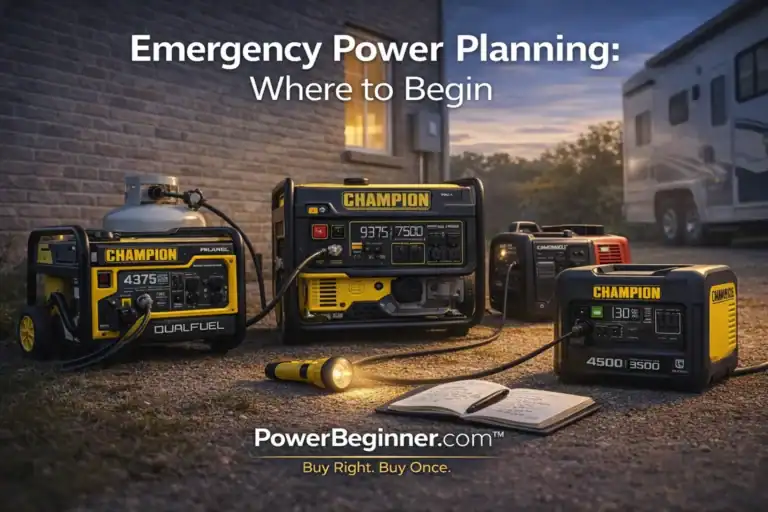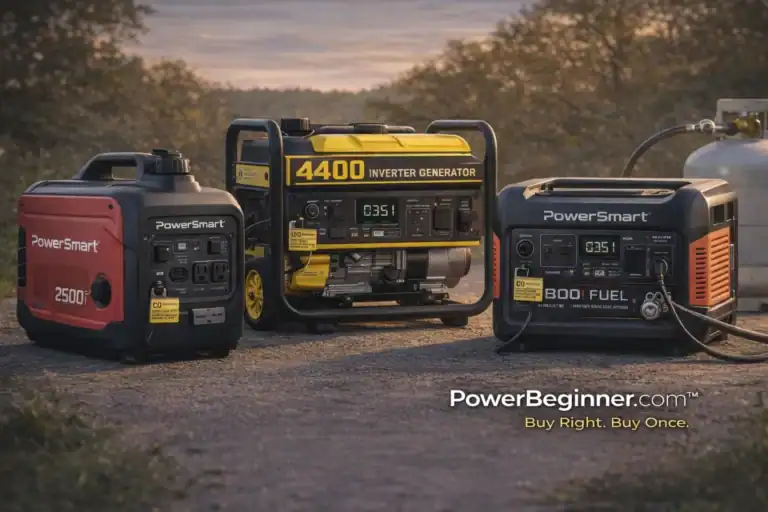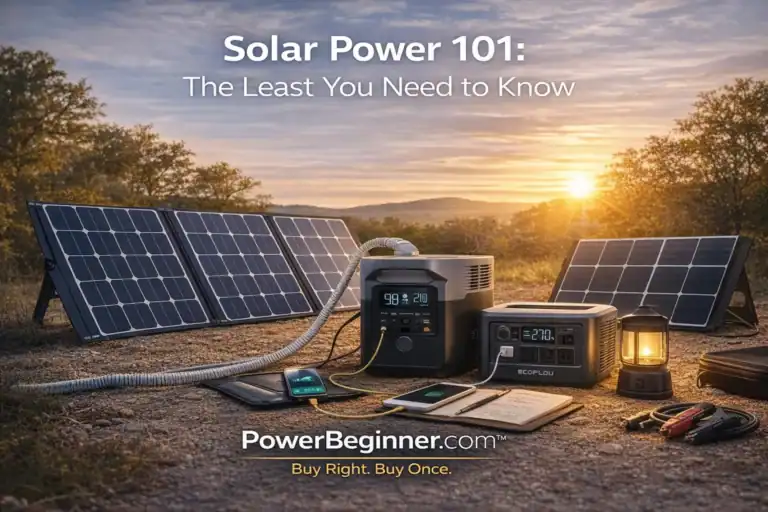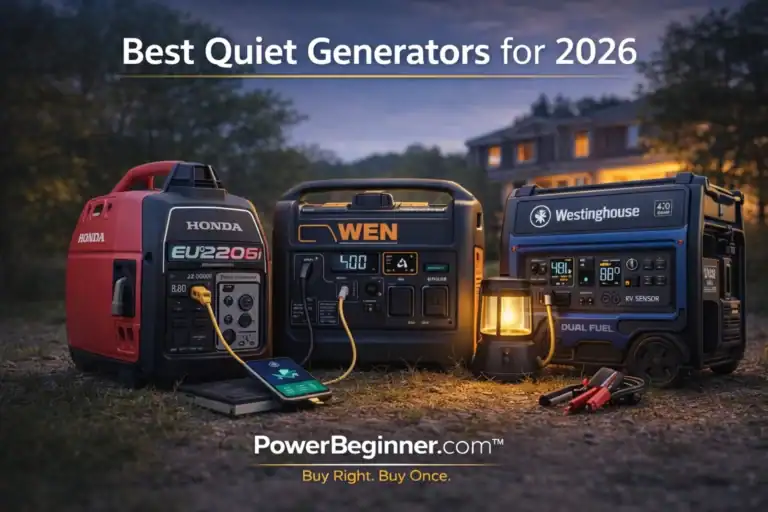
You dont need an engineering degree to buy a generator. You need to understand a handful of concepts well enough to make a smart purchase and operate the equipment safely. This guide gives you exactly that—no more, no less.
The Least You Need to Know
If you read nothing else, understand these fundamentals.
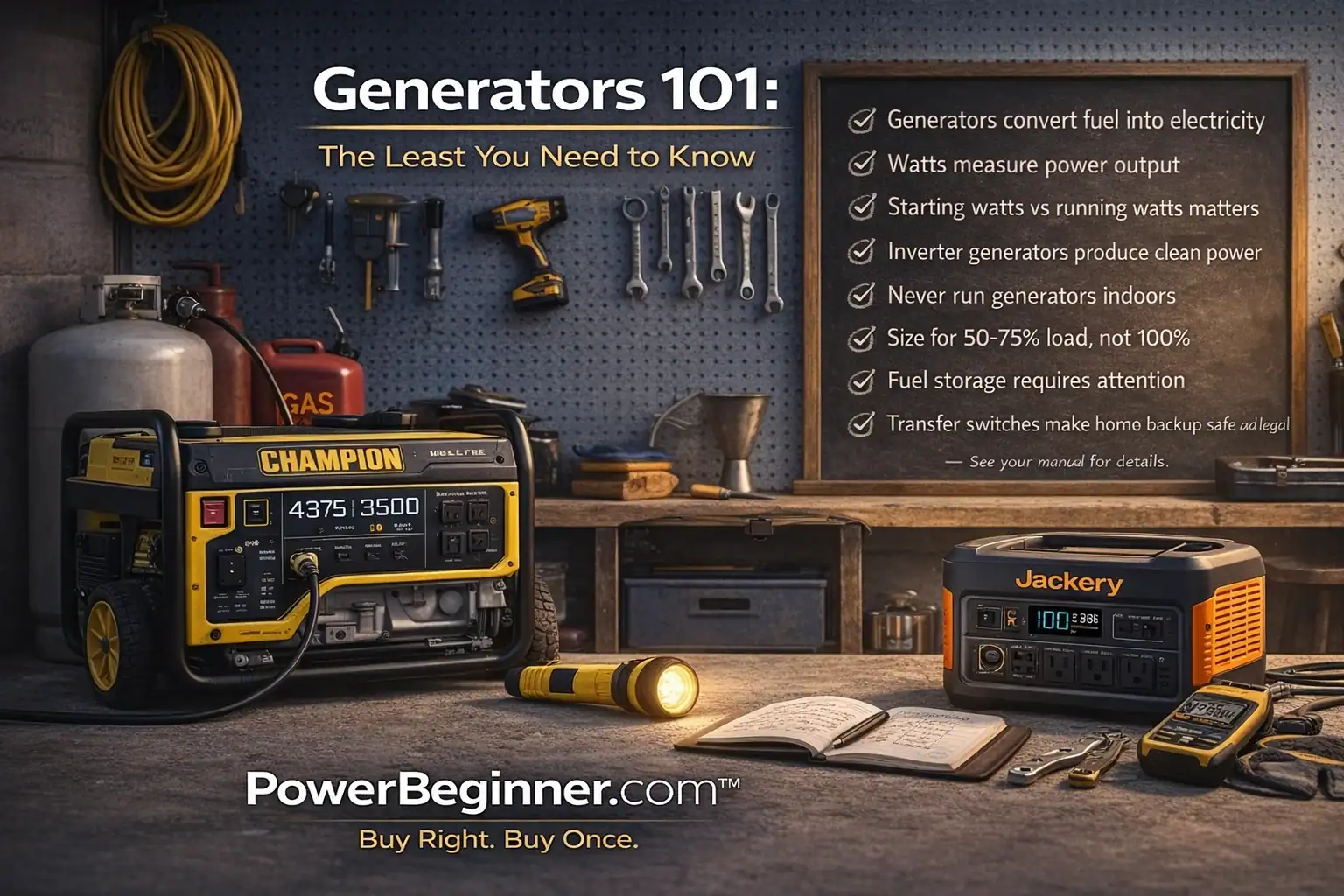
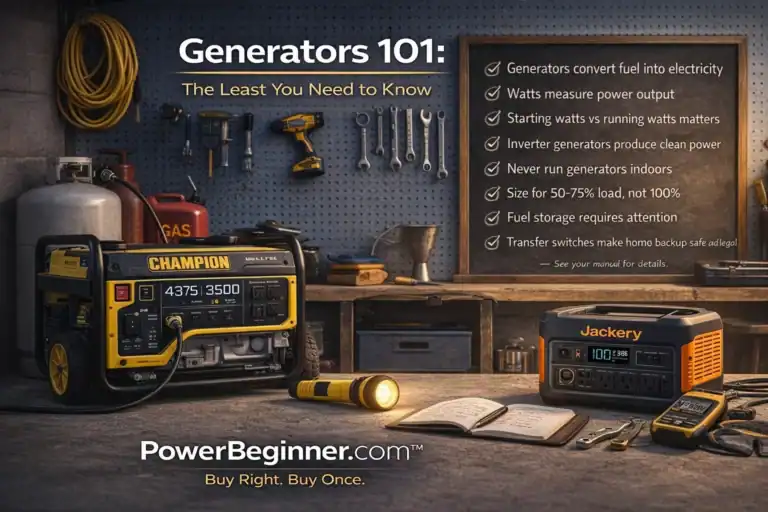
Generators convert fuel into electricity. They burn gasoline, propane, or natural gas to spin an engine that produces electrical power. The fuel goes in, electricity comes out. Simple as that.
Watts measure power output. A 3,000-watt generator produces 3,000 watts of electricity. Your devices and appliances have wattage ratings. Add up what you need to run, and buy a generator that exceeds that total.
Starting watts vs running watts matters. Motors need extra power to start—often 2-3x their running power. A refrigerator that runs at 150 watts might need 1,200 watts to start. Your generator must handle the highest starting load youll encounter.
Inverter generators produce clean power. Standard generators produce rough electricity fine for motors and lights but potentially damaging to computers and phones. Inverter generators produce smooth, clean power safe for any electronics.
Never run generators indoors. Carbon monoxide kills. Run your generator outside, at least 20 feet from windows and doors, with exhaust pointing away from the house. No exceptions. Not in the garage. Not with the door open. Outside.
Size for 50-75% load, not 100%. Running a generator at maximum capacity continuously destroys it. If you need 3,000 watts, buy a 4,000-5,000 watt generator. The headroom extends equipment life and handles unexpected loads.
Fuel storage requires attention. Gasoline degrades within 30-90 days. Use fuel stabilizer for storage. Propane stores indefinitely. Plan your fuel strategy before you need it.
Transfer switches make home backup safe and legal. Plugging a generator directly into your house without a transfer switch is dangerous and illegal in most areas. It can kill utility workers and damage equipment. Professional installation costs $500-1,500 but is required for proper home integration.
Thats it. Those eight concepts cover 90% of what beginners need to know. Everything below expands on these fundamentals for those who want deeper understanding.
Deeper Dive
How Generators Actually Work
A generator is essentially an engine connected to an alternator. The engine burns fuel to create rotational motion. The alternator converts that rotation into electrical current through electromagnetic induction—spinning magnets past copper coils to generate electricity.
The engine must maintain consistent speed to produce stable electrical output. In North America, household electricity runs at 60 Hz (cycles per second). The generator engine must spin at precisely the right speed to produce this frequency.
Conventional generators run at constant speed regardless of electrical load. Whether youre drawing 100 watts or 5,000 watts, the engine runs at full speed. This makes them simpler and cheaper but noisier and less fuel-efficient.
Inverter generators use electronic circuitry to produce clean power while allowing variable engine speed. When you draw less power, the engine slows down, reducing noise and fuel consumption. The electronics convert the raw output into stable, clean electricity regardless of engine speed variations.
The inverter technology costs more but delivers three significant benefits: clean power for electronics, quieter operation, and better fuel efficiency. For most consumer applications, inverter generators are worth the premium.
Understanding Watts, Volts, and Amps
Electrical power involves three related measurements that confuse many beginners.
Watts measure total power—the actual energy delivered. This is what matters most for sizing generators and understanding what you can run. A 100-watt light bulb uses 100 watts. A 1,500-watt space heater uses 1,500 watts.
Volts measure electrical pressure—the force pushing electricity through wires. North American household current runs at 120 volts for standard outlets and 240 volts for large appliances like dryers and air conditioners.
Amps measure current flow—the quantity of electricity moving through wires. Think of it like water: volts are pressure, amps are flow rate.
The relationship is simple: Watts = Volts × Amps
A generator with a 20-amp outlet at 120 volts can deliver 2,400 watts through that outlet (20 × 120 = 2,400). Understanding this helps you match generator outlets to your needs and avoid overloading individual circuits.
Most portable generators produce 120-volt power. Larger units also produce 240-volt power for heavy appliances. If you need 240 volts, verify the generator provides it before purchasing.
Starting Watts vs Running Watts Explained
This distinction trips up more beginners than any other concept.
Running watts (also called rated or continuous watts) is the power a generator produces steadily during normal operation. A “4,000-watt generator” typically refers to its running watts.
Starting watts (also called peak or surge watts) is the brief burst of extra power available for starting motors. This capacity lasts only a few seconds but is critical for devices with electric motors.
Why motors need surge power: Electric motors require significant current to overcome inertia and begin spinning. Once moving, they need much less power to continue running. A refrigerator compressor might need 1,200 watts to start but only 150 watts to run.
Real-world example: Your refrigerator (1,200W start, 150W run), freezer (1,200W start, 150W run), and sump pump (2,000W start, 800W run) wont all start simultaneously. But if the sump pump kicks on while the refrigerator compressor is starting, you need a generator that handles both surges—potentially 3,200 watts of starting power even though running load is only 1,100 watts.
The rule: Size your generator based on the largest starting load you might encounter, plus the running loads of everything else operating at that moment. Then add 25-50% headroom.
Generator Types and When to Use Each
Conventional Portable Generators The workhorses of backup power. Open frame designs with exposed engines, typically producing 3,000-12,000 watts. Loud (70-80 dB), heavy, but capable and affordable.
Best for: Construction sites, powering tools, home backup when noise isnt a concern, budget-conscious buyers who need significant capacity.
Inverter Generators Enclosed designs with sophisticated electronics producing clean, quiet power. Typically 1,000-5,000 watts in portable sizes, though larger models exist.
Best for: Camping, RV use, sensitive electronics, residential areas where noise matters, anyone willing to pay more for refinement.
Standby Generators Permanently installed units that start automatically when power fails. Connected directly to your home’s electrical panel and fuel supply (usually natural gas or propane). Typically 10,000-20,000+ watts.
Best for: Homeowners wanting seamless automatic backup, areas with frequent outages, those with medical equipment requiring uninterrupted power.
Dual Fuel Generators Run on either gasoline or propane, switchable via a selector. Available in both conventional and inverter configurations.
Best for: Emergency preparedness (fuel flexibility), areas where one fuel might become scarce, extended outages.
Tri-Fuel Generators Add natural gas to the dual fuel options. Can connect to your home’s gas line for unlimited runtime.
Best for: Homes with natural gas service wanting maximum flexibility and unlimited runtime during extended outages.
Fuel Types Compared
Gasoline The most common and readily available fuel. Every generator runs on gasoline. However, gasoline degrades within 30-90 days, requiring stabilizer for storage. During emergencies, gas stations may be closed, out of fuel, or have long lines. Gasoline is also flammable and requires careful storage.
Pros: Widely available, maximum power output, easy to find Cons: Degrades quickly, storage hazards, may be scarce during emergencies
Propane (LP Gas) Clean-burning fuel stored in portable tanks. Propane never degrades—tanks can sit for years and work perfectly. Burns cleaner than gasoline, reducing engine carbon buildup. However, propane produces about 10% less power than gasoline from the same generator.
Pros: Unlimited storage life, cleaner burning, available through different supply chains than gasoline Cons: Slightly less power, requires tank exchanges or refills, tanks take storage space
Natural Gas Available through municipal gas lines in many homes. Provides unlimited fuel supply during outages since gas delivery rarely fails when electricity does. Requires professional installation to connect generator. Produces about 15% less power than gasoline.
Pros: Unlimited supply, no storage requirements, very clean burning Cons: Requires installation, lower power output, not portable, useless if gas service fails
Recommendation: For most homeowners, dual fuel (gasoline/propane) provides the best flexibility. You can use gasoline normally and switch to propane if gasoline becomes scarce during extended emergencies.
Sizing Your Generator Correctly
Undersizing is the most common and expensive mistake buyers make.
Step 1: List everything you need to power
Create a list of essential devices and appliances. For each, note the running watts and starting watts. This information appears on nameplates, in manuals, or can be measured with a watt meter.
Common items and typical wattage:
| Item | Running Watts | Starting Watts |
|---|---|---|
| Refrigerator | 100-400 | 1,200-2,000 |
| Freezer | 100-400 | 1,200-2,000 |
| Sump pump | 800-1,000 | 1,500-2,500 |
| Well pump (1/2 HP) | 700-1,000 | 1,400-3,000 |
| Furnace blower | 300-500 | 500-1,000 |
| Window AC (10,000 BTU) | 1,000-1,500 | 1,500-3,000 |
| Central AC (3 ton) | 2,500-3,500 | 4,500-7,000 |
| Microwave | 600-1,200 | Same |
| Coffee maker | 600-1,200 | Same |
| Phone charger | 10-25 | Same |
| Laptop | 50-100 | Same |
| LED lights | 5-25 each | Same |
| Television | 50-200 | Same |
Step 2: Add up running watts
Total the running watts of everything you might operate simultaneously. Be realistic—you probably wont run the microwave, coffee maker, and hair dryer at the same time during an outage.
Step 3: Identify highest starting load
Find the device with the highest starting watts. This is likely a well pump, AC compressor, or large motor.
Step 4: Calculate required starting watts
Your generator’s starting watts must exceed: (Highest starting watts) + (Running watts of everything else)
Step 5: Add headroom
Multiply your required running watts by 1.25-1.5 to get your target generator size. Running at 50-75% capacity extends generator life and handles unexpected loads.
Example calculation:
- Refrigerator: 150W running, 1,200W starting
- Freezer: 150W running, 1,200W starting
- Sump pump: 800W running, 2,000W starting
- Lights (10 LEDs): 100W running
- Phone chargers: 50W running
- Furnace blower: 400W running, 800W starting
Total running: 1,650 watts Highest starting scenario: Sump pump starts while everything runs = 2,000 + 1,650 = 3,650 starting watts needed
With 25% headroom on running watts: 1,650 × 1.25 = 2,063 watts minimum running capacity
Generator needed: At least 3,650 starting watts and 2,100 running watts. A 4,000-watt generator (4,000 starting/3,200 running) handles this comfortably.
Safety Essentials
Generator safety isnt optional. People die every year from preventable generator accidents.
Carbon Monoxide Poisoning Generators produce carbon monoxide (CO), an odorless, colorless gas that kills quickly. CO poisoning causes more generator-related deaths than any other hazard.
Prevention:
- Run generators ONLY outdoors
- Position at least 20 feet from windows, doors, and vents
- Point exhaust away from any occupied structure
- Never run in garages, even with doors open
- Install battery-operated CO detectors in your home
- Choose generators with CO safety shutoff features
Electrical Hazards Improper connections cause fires, equipment damage, and electrocution.
Prevention:
- Never connect a generator directly to home wiring without a transfer switch
- Use heavy-duty, outdoor-rated extension cords
- Keep generators dry—never operate in rain without proper cover
- Never touch a generator with wet hands
- Ensure proper grounding per manufacturer instructions
Fire Hazards Generators get hot and use flammable fuel.
Prevention:
- Let generators cool before refueling
- Store fuel in approved containers away from the generator
- Keep generators away from combustible materials
- Never overfill fuel tanks
- Clean up fuel spills immediately
Backfeed Danger Connecting a generator to your home without a transfer switch can “backfeed” power into utility lines, potentially killing utility workers and damaging equipment.
Prevention:
- Always use a properly installed transfer switch for home backup
- Have transfer switches installed by licensed electricians
- Never use “suicide cords” or other improvised connections
Transfer Switches Explained
A transfer switch safely connects your generator to your home’s electrical panel.
Manual Transfer Switch A panel installed near your main electrical panel with circuits for the loads you want to power. During an outage, you physically flip breakers to switch selected circuits from utility power to generator power. Costs $200-500 for the switch plus $300-800 for installation.
Automatic Transfer Switch (ATS) Monitors utility power and automatically switches to generator power when an outage occurs. When utility power returns, it switches back automatically. Requires a generator with electric start. Costs $500-2,000 for the switch plus installation.
Interlock Kit A mechanical device that prevents your main breaker and generator breaker from being on simultaneously. Less expensive than a full transfer switch but requires manually managing which circuits receive power. Costs $50-200 plus installation.
Why transfer switches matter:
- Safety: Prevents backfeed that can kill utility workers
- Code compliance: Required by electrical code in most areas
- Convenience: Powers your existing outlets and switches normally
- Protection: Prevents damage to generator and appliances
For anything beyond running a few items via extension cords, professional transfer switch installation is essential.
Maintenance Basics
Generators require regular maintenance to start reliably when needed.
Before Each Use:
- Check oil level
- Inspect for fuel leaks or damage
- Verify air filter is clean
- Ensure fuel is fresh
Monthly (even when not using):
- Run the generator under load for 15-30 minutes
- This circulates oil, prevents carburetor gumming, and verifies function
Every 50-100 Hours or Annually:
- Change oil
- Replace spark plug
- Clean or replace air filter
- Inspect fuel lines and connections
Before Storage:
- Run carburetor dry using fuel shutoff (if equipped)
- Add fuel stabilizer to remaining fuel or drain tank
- Change oil if due
- Store in dry location
The most important rule: Run your generator monthly even when you dont need it. Generators that sit unused for months often fail when needed most. A brief monthly run prevents most storage-related problems.
Frequently Asked Questions
How long can I run a generator continuously? Most portable generators are designed for 8-12 hours of continuous operation before needing rest and refueling. Check your specific model’s recommendations. Running continuously beyond limits accelerates wear and can cause overheating. For multi-day outages, run in cycles with rest periods.
Can I run a generator in the rain? Never operate a generator in wet conditions without proper protection. Water and electricity create electrocution hazards, and water entering the engine causes damage. If you must run during rain, use a generator tent or canopy designed for this purpose, ensuring adequate ventilation for exhaust.
How much fuel does a generator use? Fuel consumption varies by generator size and load. A typical 3,500-watt generator uses 0.5-1 gallon of gasoline per hour at 50% load. Larger generators use more; inverter generators use less at partial loads due to variable engine speed. Check manufacturer specifications for your model.
Do I need to ground my generator? Most modern portable generators have a “floating neutral” design that doesnt require external grounding for typical use. However, certain applications and local codes may require grounding. Consult your manual and local requirements. When in doubt, driving an 8-foot copper grounding rod and connecting it to your generator’s grounding terminal adds safety.
What size generator do I need for a 2,000 square foot house? Square footage alone doesnt determine generator size—your electrical loads do. A 2,000 sq ft house with gas heat and no well might need 5,000 watts. The same house with electric heat, well pump, and central AC might need 12,000+ watts. Calculate based on what you actually need to power.
Can I parallel two different generators? No. Parallel operation requires identical generators or models specifically designed to work together by the same manufacturer. Mismatched generators produce out-of-sync power that causes damage. If you need more power than one generator provides, buy a larger single unit.
How do I store gasoline for my generator? Store gasoline in approved containers (red plastic gas cans with proper caps) in a well-ventilated area away from living spaces and ignition sources. Add fuel stabilizer for storage beyond 30 days. Rotate stock by using stored fuel and replacing with fresh fuel every 3-6 months. Never store more than you can use within a reasonable rotation period.
Last updated: February 2026. This guide is for educational purposes. Always follow manufacturer instructions and local codes.